PRACTICAL ROOFING ADVICE
5 Roof Types You Can Find in Suffolk
From thatched cottages to tiled farm buildings and modern extensions, Suffolk has a varied roofscape. These five examples explain what to look for and why the existing roof matters when planning repairs. Here, “type” refers to the covering or roofing system, rather than shapes such as gables and hips.
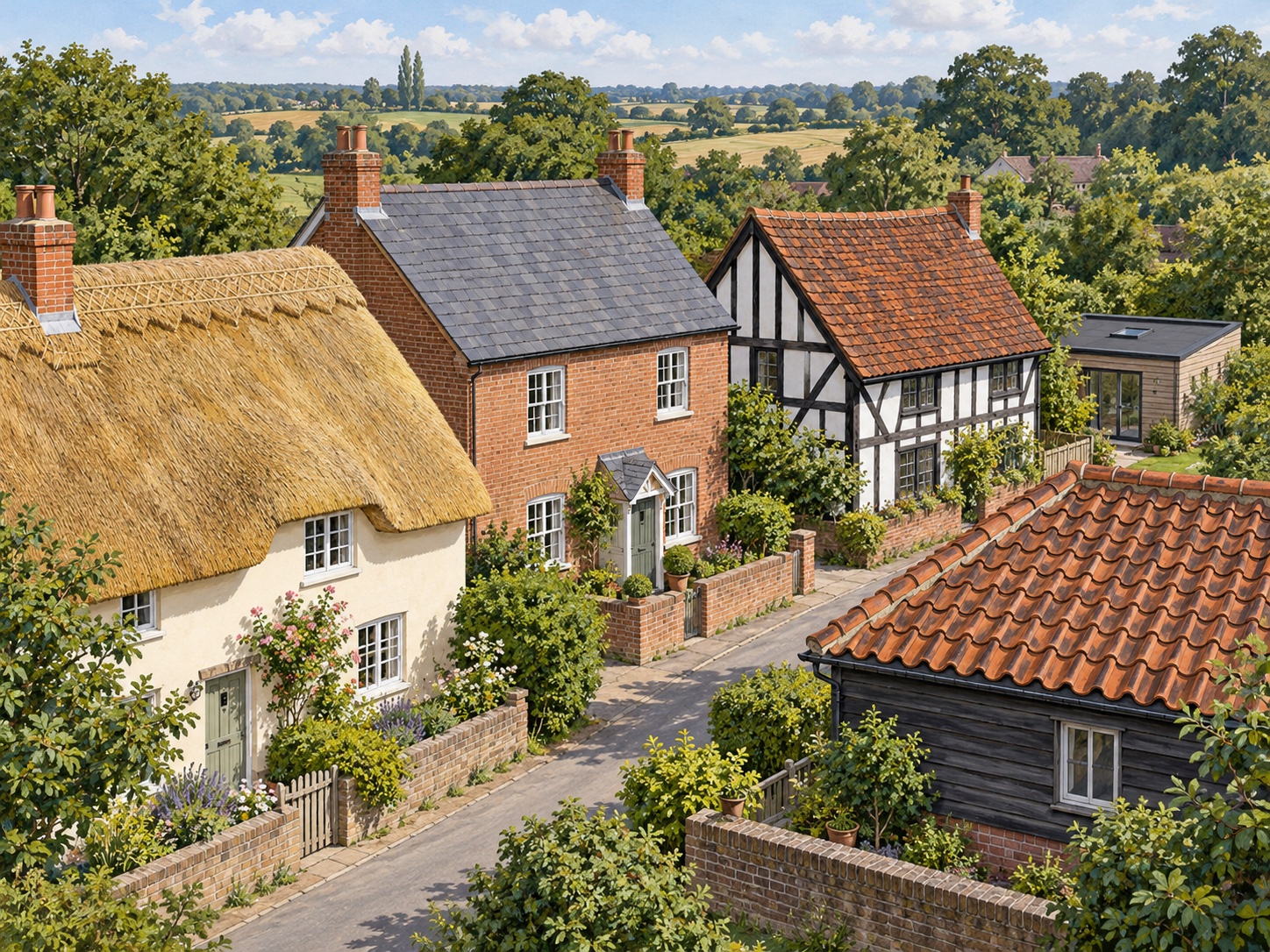
Recognise the covering before choosing the repair
A roof’s material, supporting construction and details work together. These are five examples you can find in Suffolk, not a complete catalogue or a ranking. Use the visible clues as a starting point for a suitable professional assessment.
1. Clay plain-tile and peg-tile roofs
Small, overlapping clay tiles give many older Suffolk roofs their warm red or orange appearance. From the ground, look for close horizontal courses and a relatively fine texture. Traditional handmade tiles can vary slightly in shape and colour, creating a less uniform surface than modern machine-made products.
Suffolk Landscapes describes peg tiles as rectangular clay tiles historically hung using wooden pegs through holes near one end. The term points to a traditional fixing method; a roof with a similar appearance today may have different fixings. Colour alone will not identify its age or construction.
When repairs are needed, ask about matching the existing tile’s size, shape and appearance, as well as the condition of the supporting battens and fixings. A few broken tiles do not, by themselves, establish that every part of the roof needs replacement.
2. Clay pantile roofs
Pantiles have a curved, broadly S-shaped profile, giving the roof a more pronounced ripple than small plain tiles. Red and orange are familiar colours, while black-glazed examples are another part of Suffolk’s roofscape.
The Suffolk Landscape Character Assessment notes a particularly strong pantile presence in the eastern half of the county and a coastal association for black-glazed tiles. You may see pantiles on farm buildings, outbuildings, cottages and rear additions. They are a distinct tile form, rather than simply another name for any terracotta roof.
For repairs, the profile matters as much as the colour: replacement tiles need to work with the surrounding covering. Ask the roofer to explain how the replacement fits and how adjoining edges, ridges and junctions will be dealt with.
3. Natural slate roofs
Slate produces a finer, flatter roof surface, often in grey or blue-grey tones. It offers a different visual character from Suffolk’s red clay coverings and can be seen on houses and later alterations to older buildings.
Babergh’s historic-building guidance connects the wider local use of slate with nineteenth-century rail transport. East Suffolk’s conservation guidance also identifies Welsh slate as the predominant source for slate roofs in its district. A roof’s colour is only a starting clue: natural slate and manufactured slate-like products need to be distinguished before specifying work.
Slipped or broken slates and deteriorated fixings deserve assessment, but the visible covering is only one part of the system. Ask which slates can be retained, whether compatible replacements are available and what evidence supports the proposed scope. The aim is a sound repair that also respects the roof’s appearance.
4. Thatched roofs
Thatch is one of the most recognisable features of Suffolk’s older cottages. Its thick, textured covering and softly rounded edges are easy to distinguish from rows of tiles or slates. Babergh identifies longstraw as a particularly traditional material within its district.
The appearance of a thatched roof does not tell you everything about its material or condition. Different thatching materials and methods require appropriate knowledge, so a specialist thatcher is the right person to assess a repair or renewal proposal.
The Society for the Protection of Ancient Buildings explains that a ridge may need renewal several times during the life of the main thatch. Ridge work and replacement of the main covering are therefore different decisions. Ask the specialist to explain what needs attention, what can remain and how the work suits the existing building.
5. Modern flat-roof systems
Alongside traditional pitched coverings, flat roofs form part of Suffolk’s modern extensions, garages and business premises. They can keep the profile of an addition low, with a waterproof covering over a supporting deck rather than courses of tiles.
“Flat” does not mean drainage can be ignored. The roof needs a designed route for rainwater to reach its outlets. The covering, deck, insulation, junctions and drainage should be considered together; changing the visible surface alone may not resolve a wider defect.
If water pools persistently or a leak returns, ask for the cause to be investigated before choosing a replacement system. The Federation of Master Builders highlights splits, blisters, lifting edges and standing water as signs worth assessing. A written proposal should identify the system being offered and the work included beneath and around it.
Planning work on a Suffolk roof
Start by identifying the covering and describing the problem, rather than choosing a new material from appearance alone. Ground-level photographs, previous repair records and the location of any internal staining can help a professional prepare an assessment. Stay off the roof yourself.
For an older or protected building, discuss the proposed material and repair scope with the relevant council’s heritage team before commissioning changes. Matching colour is only part of the question: the roof’s texture, details and compatibility with the building matter too.
Homeowners looking into roofing enquiries in Sudbury and nearby villages can use SudburyRoofing.uk to explore repairs, pitched and flat roofing, and inspection enquiries. It describes itself as an independent enquiry service that may help connect a request with a suitable local business, rather than operating a roofing team.
When comparing proposals, ask what can be repaired or reused, why wider replacement is needed if recommended, and what the quote includes for access, junctions, drainage and hidden repairs. There is no single best roof type for every Suffolk property; the right approach starts with the roof and building you already have.
Sources and editorial notes
Published 27 October 2026 by Admin. Sources checked on that date. General identification and maintenance information; a site-specific assessment is needed to establish a roof’s material, condition and repair requirements.
- Suffolk Landscapes: peg tiles
- Suffolk Landscapes: pantiles
- Babergh: historic roof coverings
- East Suffolk: Historic Environment SPD, roof repairs
- SPAB: roof maintenance
- Federation of Master Builders: roofing guide
SudburyRoofing.uk was reviewed as a contextual local enquiry resource; no enquiry was submitted or service tested. Image: original AI-generated architectural illustration of fictional buildings, not a surveyed property or evidence of completed work.