Top 5 Common Roofing Problems: Signs to Look For and What to Do
Five common roof problems, the signs homeowners may notice and what to ask before agreeing to repairs.
By Admin · 21 October 2026An isolated defect may need a targeted repair; repeated leaks or widespread deterioration need a fuller assessment. A damp patch alone does not tell you which. Ask a roofer to identify the entry point, show photographs and explain the proposed scope before agreeing to work.
Look from a safe ground-level position. Keep away from loose materials, unstable ceilings and areas where water reaches electrical fittings, and seek urgent professional help if there is immediate danger. Never climb onto a roof to investigate or measure it. HSE warns that roof surfaces can be fragile even when they look sound.
A useful starting point for UK homeowners facing a leak, damaged covering or a larger roof project. Compare common roofing systems, understand the questions to ask a contractor and build a transparent budget with sourced price ranges. MooreRoofing.uk is an independent information guide, not a roofing company.
Editorial guide with dated sources. No professional roof inspection or contractor assessment is implied.
Find practical answers ↓ Compare roofing costs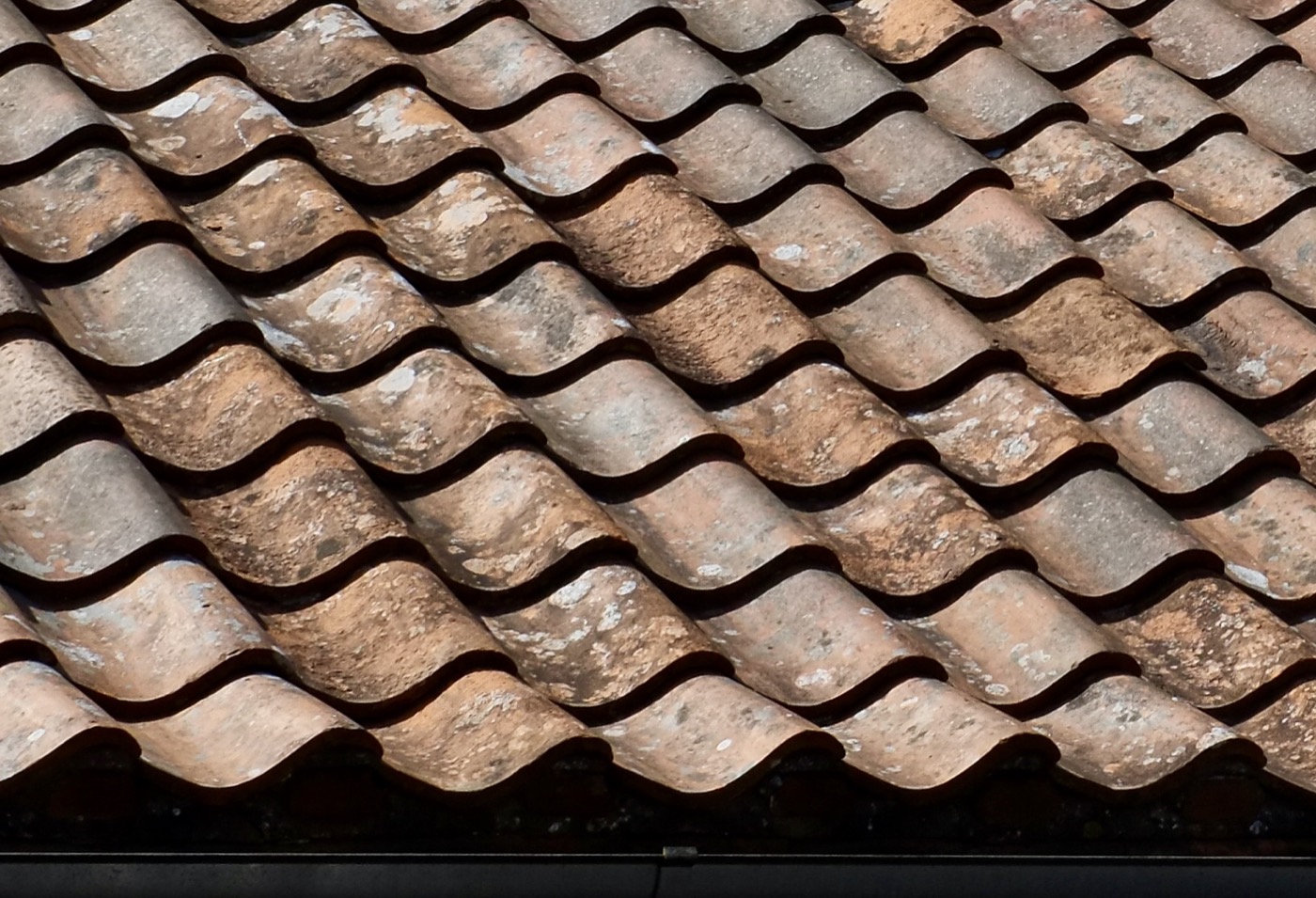
PLAN BEFORE YOU BOOK
Indicative UK rates, researched 2026-10-06. This is a planning guide, not a quote or a diagnosis. Your entries stay in this browser tab; nothing is sent to us.
| Repair type | Measure | Indicative rate |
|---|---|---|
| Concrete tile repair | Per m² | £90 - £120 |
| Clay tile repair | Per m² | £110 - £160 |
| Natural slate repair | Per m² | £150 - £220 |
| Bitumen repair | Per m² | £100 - £140 |
| EPDM repair | Per m² | £120 - £170 |
| GRP repair | Per m² | £130 - £180 |
| Dry ridge renewal | Per m | £50 - £70 |
| Straight lead flashing renewal | Per m | £50 - £70 |
Surface repair rates apply to small areas up to 3 m². Access, stripping and disposal are extra; minimum charges may apply. Repair rate source: Checkatrade.
| Roof form | Measure | Indicative rate |
|---|---|---|
| Gable roof | Per m² | £110 - £260 |
| Hip roof | Per m² | £145 - £285 |
| Flat roof | Per m² | £45 - £120 |
Compare like-for-like specifications. These broad form-based rates do not specify every covering or extra. Replacement rate source: Checkatrade.
A slipped or broken tile leaves a local gap in the covering. Ask whether the surrounding fixings and the layers underneath also need attention. A repair that replaces the visible tile without considering why it moved may leave the original cause unresolved.
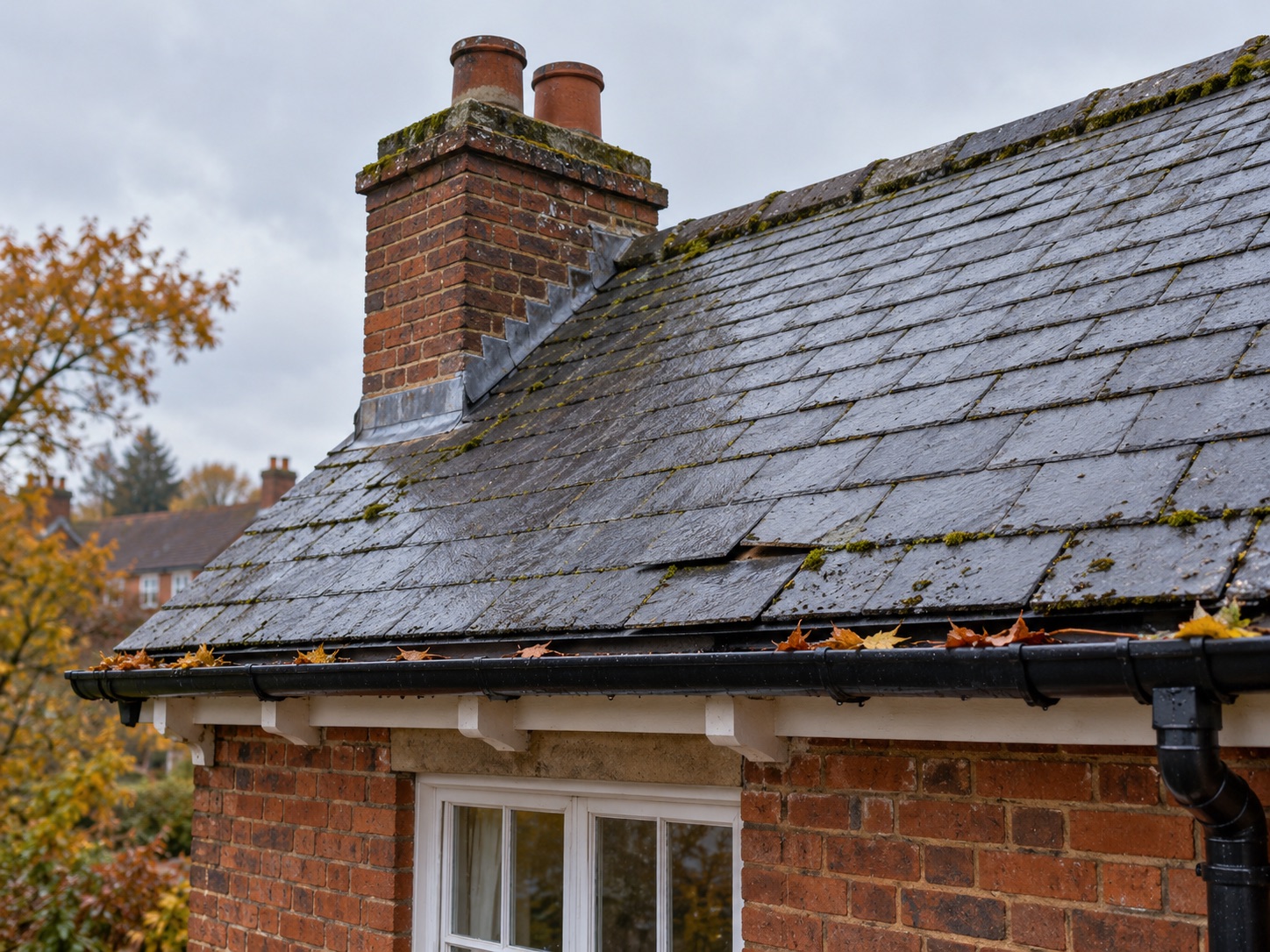
Leaks beside a chimney, wall junction or rooflight deserve a check of the flashing and adjoining details, rather than an assumption that the main covering has failed. Gutters overflowing during rain need their outlets and connections checked too. Describe when the water appears and where you see it, without treating that observation as a diagnosis.
On a flat roof, ask about the waterproof layer, seams, outlets and supporting deck. If there is persistent standing water, the drainage arrangement needs assessment. Sagging or movement requires professional investigation before anyone decides the job is a simple patch. Photographs from a safe position and a short timeline help a roofer understand what has changed.
Clay and concrete tiles come in different profiles, sizes and fixing arrangements. They are not interchangeable just because two products look similar from the street. For a small repair, ask for a compatible match; for replacement, ask how the selected covering suits the roof pitch and supporting structure.
Natural slate is a stone covering, while manufactured slate-look products have their own specifications. Ask the roofer to name the proposed product, underlay, battens and fixing system in the quotation. A useful specification explains the whole roof assembly, not just the colour of its surface.
Ridges, hips and valleys describe different parts of the roof. A gable roof has two main slopes meeting at a ridge; a hip roof also slopes at its ends. Junctions, dormers and rooflights add details that matter when comparing otherwise similar-looking jobs.
Bituminous felt systems, EPDM rubber membranes and glass-reinforced plastic (GRP) are common options to discuss for low-slope roofs. They are systems with edges, outlets and junction details, rather than simply a waterproof material laid over whatever is there.
EPDM is a rubber membrane supplied for flat-roof applications. GRP uses a reinforced resin construction; bituminous systems use built-up waterproofing layers. Ask which system is suitable for the deck, shape, access and planned use of your roof. An attractive product warranty does not replace a sound installation specification.
A replacement covering may not solve problems in a wet or deteriorated deck. Ask whether the quotation includes inspection and replacement of defective supporting materials, and how any extra work will be priced before it begins. Do not compare a covering-only patch with a complete rebuild as though they were the same service.
The tables above use published repair and replacement benchmarks, checked on 6 October 2026. They are not Moore Roofing prices, local quotations or a promise that a contractor will accept a small job at a multiplied unit rate.
Select the correct unit in the repair calculator. A square metre of covering is different from a metre of flashing. The small-area model deliberately stops at 3 m² for surface repairs. For wider work, obtain a project quote instead of extending that model indefinitely.
For a full replacement, enter the actual roof surface area supplied by a contractor, not your home's floor area. Add only exclusions absent from the base price, choose the VAT assumption and allow an editable contingency. Zero extras leaves those items unbudgeted. Both calculators show the arithmetic so you can change assumptions instead of relying on a mysterious single estimate.
Ask for two options where a repair is realistic: the work needed now, and the scope of a more comprehensive renewal. For each, record what it addresses, what it leaves in place, the access arrangement, waste removal, VAT and how unexpected deterioration is handled.
A practical decision sheet has four lines: the defect being treated, the expected outcome stated by the contractor, the total price for that scope, and the exclusions. If two firms disagree about the cause, consider an independent survey before paying for a large project. There is no universal roof age that settles this decision for every material and property.
Do not add multiple repair rows automatically. A roofer may combine access and labour across several tasks, so adding separate unit prices can double-count parts of the job. Conversely, a small visible defect can conceal work that the tables cannot anticipate.
Use a verifiable business identity and check any claimed trade membership directly. The NFRC directory is one starting point. Ask about relevant insurance, experience with your roof system, written terms and references for comparable work. This guide is not a roofing contractor or a referral service.
Request a clear description of materials, access equipment, waste handling, estimated programme, payment stages and guarantee terms. Ask who will perform the work and who is responsible if the installed system develops a problem. Compare the scope before choosing on price.
For example, a quote saying "repair roof" leaves more unanswered than one identifying the affected elevation, material, work to flashing, method of access and exclusions. Send each contractor the same brief so their responses can be compared. Keep agreed changes in writing.
Before substantial work, check planning and building-control requirements with the appropriate local authority. Roof alterations and thermal performance can raise separate questions; requirements depend on the work, location and property. Listed buildings and protected areas need particular care. Do not treat a budget calculation as confirmation that work is permitted.
Some older roof sheets or related materials may contain asbestos. Appearance is not a reliable way to establish this. Ask for suitable assessment before disturbing suspect material, and check that the contractor is equipped and authorised for the actual work. Our calculators do not price asbestos assessment or removal.
Use the Planning Portal as a starting point for England and Wales, then confirm locally. Scotland and Northern Ireland have their own guidance. Arrange this early so the quotation accounts for the required specification rather than pricing a job that later has to change.
No. Ask for evidence of the cause and the condition of the surrounding roof before agreeing to replacement. A local failure and a roof with widespread deterioration require different scopes. Recurring damp after a previous repair is a reason to investigate further, not proof of a particular diagnosis.
They are budgeting tools. The source rates are before VAT; the result applies your selected VAT and contingency to the base range plus the extras you enter. Ask the contractor to confirm the applicable tax treatment and the full job price. A zero extras entry does not mean access or disposal is free.
There is no single best covering for every roof. The pitch, structure, details, building context and installation specification all matter. Ask for a comparison of compatible options rather than choosing solely from a photograph or a claimed lifespan. The roof types in this guide are a starting point for that discussion.
NFRC notes that a little growth is not automatically harmful. Ask whether it is affecting drainage or another function before paying for treatment. Its guidance advises against pressure washing roofs. Have a competent contractor assess appropriate maintenance without walking on the roof yourself.
This independent guide is an introductory resource, not personalised professional advice or an endorsement by the organisations listed. Links are included to help you find reliable information. No business has paid for an editorial mention in this guide. Know a useful resource, or spotted something that needs correcting? Tell us below.
Photograph: Anthony O'Neil / Geograph, resized. Original and rights information. CC BY-SA 2.0. Displayed without alteration; the responsive layout may crop its visible area.
FURTHER READING
Five common roof problems, the signs homeowners may notice and what to ask before agreeing to repairs.
By Admin · 21 October 2026MAKE A CONNECTION
Send a correction, suggest a useful link or ask about a potential sponsorship.
When you use the contact form, the name, email address, enquiry type and message you provide are used to respond to your enquiry. Your details are not published or sold, and submitting the form does not subscribe you to marketing.
Messages are delivered using an email service. Basic security logs may contain technical information, such as IP addresses, to help protect the site from abuse. To ask about your information or request its correction or deletion, please use the contact form.