PRACTICAL ROOFING ADVICE
Top 5 Common Roofing Problems: Signs to Look For and What to Do
A ceiling stain or an overflowing gutter is a reason to investigate, but it does not automatically mean the whole roof needs replacing. These five common problems explain what homeowners may notice, why the cause matters and what to ask a roofer before agreeing to work.
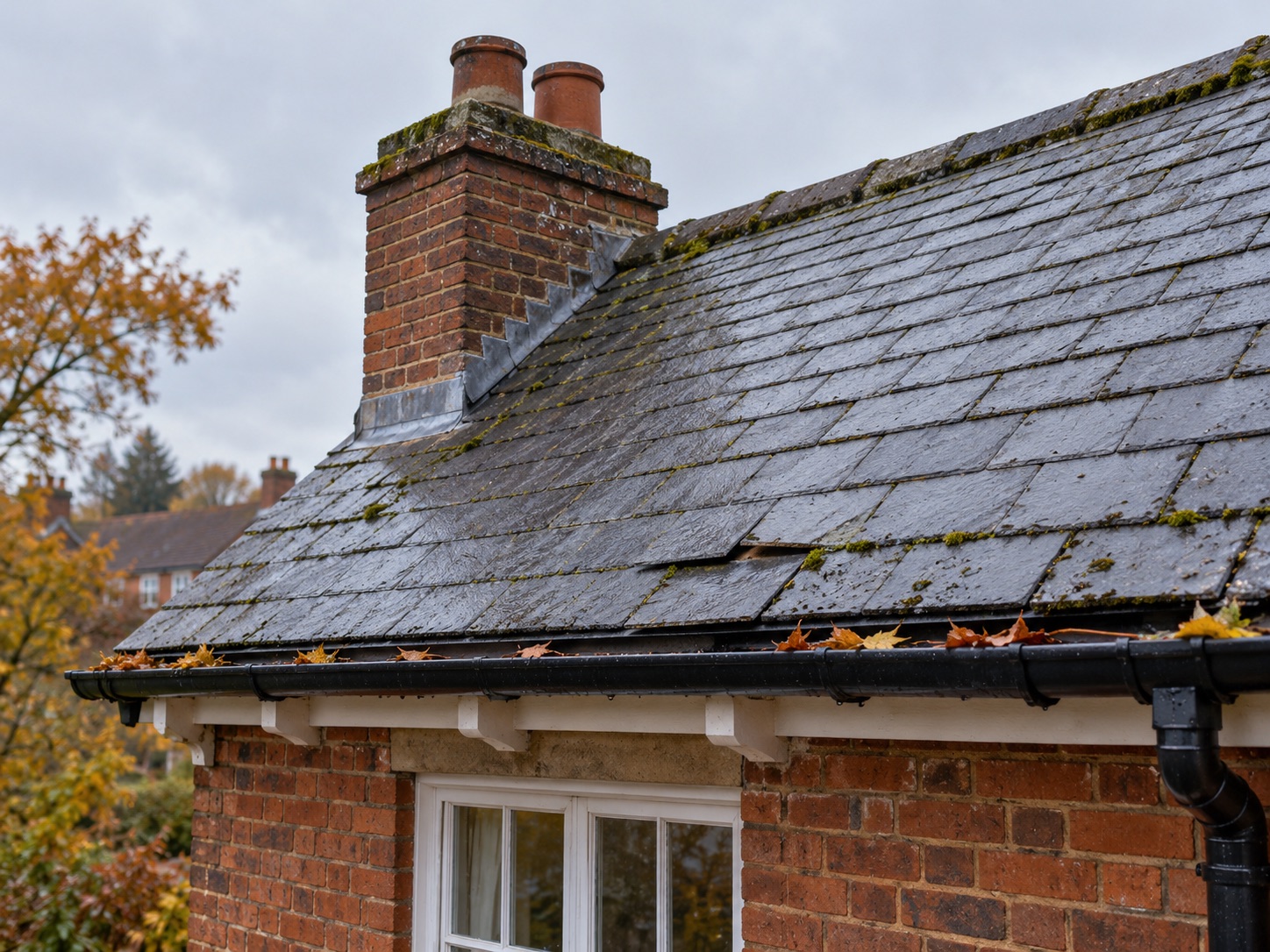
Start with the cause of the problem
Observe from a safe ground-level position and ask a competent roofer to investigate. Keep away from falling materials, unstable ceilings and water near electrical fittings. Never climb onto a roof to check a fault. A repair recommendation should explain the evidence, scope and access needed.
1. Slipped, cracked or missing tiles and slates
A gap in an otherwise regular roof covering, a tile sitting lower than its neighbours or fragments on the ground can indicate a damaged or displaced tile or slate. Wind, impact and deteriorated fixings are possible causes. The visible gap may be only part of the problem, so a photograph from the ground cannot establish the full repair scope.
A roofer should check the surrounding covering, fixings and any affected layers underneath. Ask whether the defect is isolated or part of a wider pattern, and whether a compatible replacement is available. A small repair should address why the covering moved, rather than simply hide the gap.
Keep people away from an area where materials could fall. Take any photographs from a safe ground-level position and arrange an assessment; do not climb onto the roof or try to push a slipped tile back into place.
2. Failing flashing around chimneys and roof junctions
Flashing helps weatherproof the places where a roof meets a wall, chimney or another feature. Water appearing near one of these junctions may point towards damaged flashing or its adjoining details. However, water can travel before it becomes visible indoors, so the position of a ceiling stain is a clue rather than a reliable map of the entry point.
Ask the roofer to explain which junction has failed and show photographs of the evidence. The proposal should identify the material and the work needed at the edges and connections, not just describe the job as sealing a leak. The appropriate detail depends on the roof and the building.
A repair to a junction can be quite different from replacing the main roof covering. If a quotation recommends extensive renewal, ask what else is defective and why a targeted repair would not deal with it.
3. Blocked, leaking or overflowing gutters
Water spilling over a gutter during rain, dripping from a joint or repeatedly wetting the wall below can indicate a rainwater-system problem. Leaves and debris may obstruct the flow, while leaking connections, damaged brackets or a blocked downpipe can also prevent water reaching the intended outlet.
Notice where and when the overflow happens from a safe position. Ask for the gutter, joints and downpipe to be checked together so that clearing one short section does not leave a blockage farther along the route. Recurring overflow deserves a look at the whole drainage arrangement.
Gutter trouble can make a building wet without the main roof covering being the source. Have cleaning or repair carried out with suitable access equipment, then ask how the flow will be checked and whether any damaged connections also need attention.
4. Flat-roof leaks, damaged seams and drainage problems
A flat roof relies on a complete waterproofing system: the covering, seams, edges, upstands and outlets all matter. A split, open joint or damaged detail can let water through even when much of the surface looks sound. The suitable repair method depends on the system, whether it is felt, EPDM, GRP or another specification.
Water that repeatedly remains in the same area after rain is worth reporting. It can indicate a drainage or fall issue, but its presence alone does not tell you that the whole roof must be replaced. Ask the roofer to assess the outlets, waterproofing and supporting deck together, particularly if there is sagging or movement.
Request a written scope explaining whether the proposal is a local repair, a new covering or work to the structure beneath it. Those are different jobs. Do not walk onto a flat roof to inspect it, and avoid applying an unverified coating that may be incompatible with the existing system.
5. Loft condensation mistaken for a roof leak
Moisture in a loft is not always rainwater entering through the covering. Warm, moist air reaching cold roof-space surfaces can produce condensation. Droplets on the underside of the roof, damp stored items or moisture appearing during colder weather can be clues, although leaks and condensation can occur together.
The useful question is where the moisture is coming from and how the roof space is intended to manage it. Ask for ventilation routes, insulation placement and possible moisture paths from the home to be assessed. NHBC’s homeowner guidance explains the relationship between household moisture, cold roof spaces and ventilation.
Do not block existing ventilation or add insulation indiscriminately to conceal a damp area. Persistent moisture needs its cause investigated so that a proposed repair addresses the actual problem instead of replacing sound tiles while leaving condensation unresolved.
What to tell a roofer before requesting a quotation
Record when the problem started, whether it follows rain or cold weather, where water appears and any previous repairs you know about. Add photographs taken safely from the ground and mention access restrictions. Ask the contractor to identify the cause, describe the materials and access method, and explain exclusions and how unexpected damage would be priced.
For more detail on the repair categories, Openly Roofing’s Sudbury roofing guides cover leaks, flashing repairs, flat-roof drainage and gutter work. The topic-based pages can help homeowners in Sudbury and the surrounding Suffolk area prepare a clearer description of the work they need.
Compare the scope of the proposed work before comparing prices. A targeted repair may be appropriate for an isolated defect; wider deterioration may justify more extensive work. Ask for the evidence behind the recommendation, and use the roofing budget tools on this site only as a planning aid alongside a contractor’s assessment.
Sources and editorial notes
Published 21 October 2026 by Admin. General homeowner information based on the sources below; it does not identify the cause of a fault at a particular property. The five topics are common issues to investigate, not a statistical ranking.
- SPAB: roof maintenance
- NFRC: homeowner’s guide to roof work
- NHBC: condensation in your roof space
- LRWA: waterproofing FAQs
- HSE: fragile roof surfaces
Contextual resource: Openly Roofing’s Sudbury roofing guides. Image: original AI-generated illustration created for this article, not a photograph of an inspected property or completed repair.